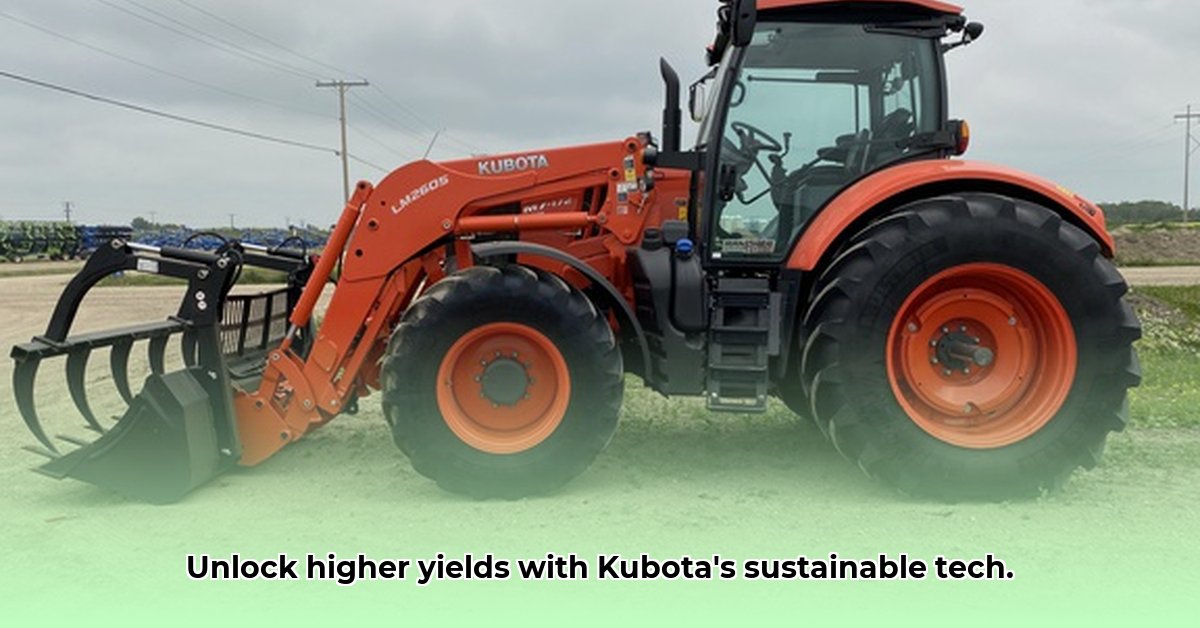
Kubota large tractors are revolutionizing sustainable agriculture, enabling farmers to achieve higher yields while minimizing environmental impact. This isn't simply about larger, more powerful machines; it's about leveraging precision farming technologies to optimize resource use and maximize efficiency. This article explores how Kubota tractors facilitate this transition, outlining the benefits, challenges, and actionable steps for farmers looking to adopt these advanced techniques. Learn more about Kubota's L-Series tractors here.
Precision Farming: Optimizing Resource Use for Higher Yields
Precision farming involves utilizing technology to manage resources—water, fertilizer, seeds, and time—with unprecedented accuracy. Imagine a farm meticulously mapped, allowing for targeted interventions based on real-time data. GPS-guided planting ensures optimal seed spacing, maximizing sunlight and nutrient uptake. This precision translates to healthier plants and significantly improved yields. Variable-rate technology takes this further, analyzing soil conditions to determine the precise amount of fertilizer and pesticide needed for each area. This targeted approach minimizes waste, reduces environmental impact (less chemical runoff), and ultimately lowers costs while boosting yields. Real-time monitoring of soil moisture and other vital plant parameters allows farmers to proactively address potential problems, minimizing crop loss.
"Precision farming isn't just about bigger harvests, it's about smarter farming," says Dr. Emily Carter, Agricultural Engineering Professor at the University of California, Davis. "It allows for a more sustainable and efficient use of resources, which benefits both the farmer and the environment."
But how does this translate to tangible results? Studies have shown that precision farming can lead to yield increases of up to 15-20%, while simultaneously reducing water and fertilizer usage by 10-15%. Isn't this a compelling reason to consider precision farming technologies?
Kubota Large Tractors and the Sustainable Advantage
Kubota's large tractors are ideally suited for precision farming. Their robust design and power capabilities handle the demands of large-scale operations, seamlessly integrating with GPS guidance systems and other data-driven tools. Beyond yield maximization, these tractors contribute to sustainability through fuel efficiency, reducing both operating costs and carbon emissions. This creates a triple win: higher profits, reduced expenses, and a smaller environmental footprint.
The Challenges of Implementing Precision Farming
Adopting precision farming isn't without its hurdles. The initial investment can be significant, requiring capital outlay for technology and supporting infrastructure. However, the potential long-term returns—higher yields and lower costs—often justify this investment.
Another challenge lies in effectively managing the vast amounts of data generated. Analyzing and interpreting this information requires expertise and robust data management systems. "Farmers need to be comfortable with data," explains Mr. John Miller, Farm Operations Manager at Green Valley Farms. "It's about understanding what the data is telling you and using that knowledge to make informed decisions." This emphasizes the need for training and support to ensure farmers can effectively utilize the technology.
Navigating the Learning Curve: Accessing Training and Support
Fortunately, numerous resources exist to assist farmers. Kubota offers comprehensive training programs, while government initiatives provide subsidies and support. Educational institutions also play a vital role, offering courses and workshops. This collaborative approach makes precision farming more accessible.
Actionable Steps for Implementing Precision Farming
- Assess Your Needs: Identify areas where precision farming can yield the greatest benefits.
- Explore Technology: Research available solutions compatible with your operation and budget. Consider Kubota's offerings and explore other options.
- Invest in Training: Ensure your team has the skills to operate and maintain the technology.
- Start Small: Begin with a pilot project to assess feasibility before full-scale implementation.
- Monitor and Adapt: Continuously analyze data and adjust strategies for optimal results.
Weighing the Pros and Cons: A Balanced Perspective
| Pros | Cons |
|---|---|
| Increased yields (up to 20%) | High initial investment |
| Reduced resource use (water & fertilizer) | Complex data management |
| Improved environmental sustainability | Requires specialized training |
| Enhanced profitability | Potential technical failures and downtime |
| Improved resource management | Data security and privacy concerns |
| Reduced labor costs (in some cases) | Dependence on reliable infrastructure and technology |
Choosing Effective Data Management Strategies
Kubota offers integrated systems like the Farm Management Information System (FMIS) and Smart Agri System (KSAS) that collect and analyze data from various sources. The choice of which system to implement depends on many factors including farm size, budget, and the specific challenges faced. Careful assessment of your data needs is crucial for selecting the most appropriate system. Effective data management also necessitates a robust process for data integration, training, regular monitoring, and adaptive strategies, along with attention to data security and privacy regulations.
Key Takeaways:
- Kubota's large tractors are pivotal in enabling sustainable, precision farming.
- While initial investments are substantial, the long-term benefits often outweigh the costs.
- Proper training and data management are vital for effective implementation.
- A collaborative effort involving farmers, technology providers, and government agencies is critical for widespread adoption.
The future of agriculture increasingly relies on data-driven precision technologies. Kubota tractors, along with comprehensive support networks and collaborative efforts, are leading the charge towards a more sustainable and productive agricultural landscape.